World Liberty Financial Faces Scrutiny After USD1 Stablecoin Falls to $0.94

Cryptocurrency trading is speculative and your capital is at risk when you trade. We may earn affiliate commissions from some of the products on this page - at no extra cost to you.

Highlights:
- USD1’s brief depeg raises questions over World Liberty Financial’s lending activities, risk management, and potential conflicts of interest.
- A wallet withdrew 24.6 million USD1 from Dolomite, leaving limited liquidity for other lenders to withdraw.
- World Liberty Financial reduced its debt and assured investors that USD1 remains fully backed by reserves.
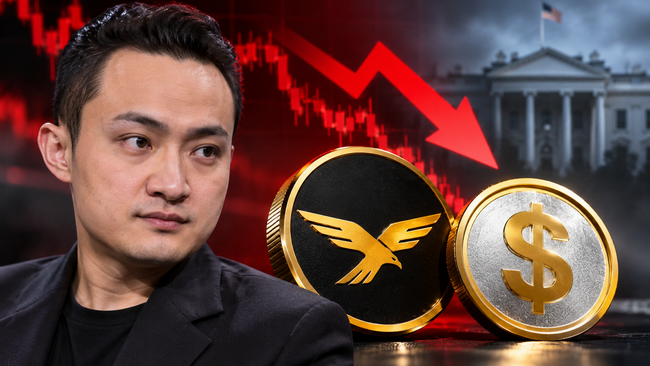
Trump-backed World Liberty Financial (WLFI) is facing fresh questions over its lending activities and risk management after its USD1 stablecoin briefly lost its dollar peg. USD1 fell to $0.94 on some cryptocurrency exchanges on November 28, while the project’s WLFI governance token plunged more than 50%.
Advertisement

In a November 29 post on X, crypto journalist Eleanor Terrett reported that a wallet withdrew 24.6 million USD1 from decentralized finance (DeFi) lending platform Dolomite. The withdrawal left little liquidity available for other lenders seeking to recover their funds.
🚨NEW: In April, World Liberty Financial posted its $WLFI governance token as collateral on Dolomite, a DeFi lending platform, to borrow stablecoins including its branded $USD1.
On Saturday, according to onchain analysis, a wallet withdrew 24.6 million USD1 from Dolomite,…
— Eleanor Terrett (@EleanorTerrett) November 29, 2026
World Liberty had used its WLFI tokens as collateral on Dolomite in April to borrow stablecoins, including USD1. According to a market observer cited by Terrett, fears of bad debt prompted lenders to withdraw their funds. The observer also identified a separate $60 million borrowing loop in which USD1 served as collateral to borrow more USD1.
World Liberty Financial Faces Questions Over Potential Conflict of Interest
World Liberty Financial’s chief technology officer, Corey Caplan, is also a co-founder of Dolomite, the platform from which World Liberty borrowed stablecoins. His role in both companies has raised concerns over a potential conflict of interest. Terrett also raised questions about BitGo, the current issuer of USD1.
Although BitGo issues the stablecoin, World Liberty controls its brand and earns revenue from it. However, it remains unclear who is responsible for managing the risks associated with USD1.
Terrett questioned whether World Liberty had to notify BitGo about its borrowing on Dolomite. She also asked whether BitGo had assessed how liquidity problems on the lending platform could affect USD1. World Liberty plans to become the issuer of USD1 once it receives final approval from the U.S. Office of the Comptroller of the Currency (OCC).
World Liberty Reduces Debt and Defends USD1 Reserves
In response to the market downturn, World Liberty Financial announced that it had sold a portion of its Ethereum (ETH) and mETH treasury holdings to repay outstanding debt. The company closed one of its three lending positions and reduced debt across the remaining two. It also lowered the liquidation price of its WLFI collateral from above $0.02 to approximately $0.00631, a reduction of nearly 70%.
Over the past 24 hours, World Liberty Financial has taken proactive steps to strengthen its treasury and reduce liquidation risk amid a broader crypto market downturn.
To put it simply:
– We consolidated three lending positions into two.
– We sold a portion of our…— WLFI (@worldlibertyfi) November 28, 2026
World Liberty confirmed that it did not sell any WLFI tokens during the process. The company also maintained that its treasury lending activities had not affected USD1 reserves.
In a separate statement, the project said:
“Let’s be clear: USD1 remains fully backed 1:1 and redeemable for one US dollar. A temporary price dislocation on a secondary market does not change the underlying value or backing of USD1. Its reserves remain unaffected.”
The company said Fidelity holds the reserve assets separately from its treasury lending positions. It also pointed to monthly KPMG attestation reports and Chainlink-powered Proof of Reserves as tools for verifying USD1’s backing.
USD1 Depeg Raises Questions Ahead of GENIUS Act Implementation
The incident comes ahead of the implementation of the OCC’s final GENIUS Act regulations, which take effect on January 18, 2027. The regulations will require permitted stablecoin issuers to ensure that transactions involving insiders or affiliates do not create significant financial risks. Issuers must also assess and oversee their service providers.
It remains unclear whether World Liberty qualifies as a BitGo affiliate under these rules. Receiving revenue from USD1 or controlling its brand does not automatically make World Liberty an affiliate. However, the recent depeg raises questions about how both companies manage risks linked to DeFi lending.

eToro Platform
Best Crypto Exchange
- Over 90 top cryptos to trade
- Regulated by top-tier entities
- User-friendly trading app
- 30+ million users

eToro is a multi-asset investment platform. The value of your investments may go up or down. Your capital is at risk. Don’t invest unless you’re prepared to lose all the money you invest. This is a high-risk investment, and you should not expect to be protected if something goes wrong.
Advertisement