OCC Finalizes GENIUS Act Rules for US Stablecoin Issuers

Cryptocurrency trading is speculative and your capital is at risk when you trade. We may earn affiliate commissions from some of the products on this page - at no extra cost to you.
Highlights:
- The OCC has finalized new US stablecoin rules under the GENIUS Act to strengthen issuer oversight.
- The rules cover stablecoin reserves, customer redemptions, risk management, audits, and approval requirements for issuers.
- The new framework takes effect in January 2027, while separate anti-money laundering regulations will follow later.
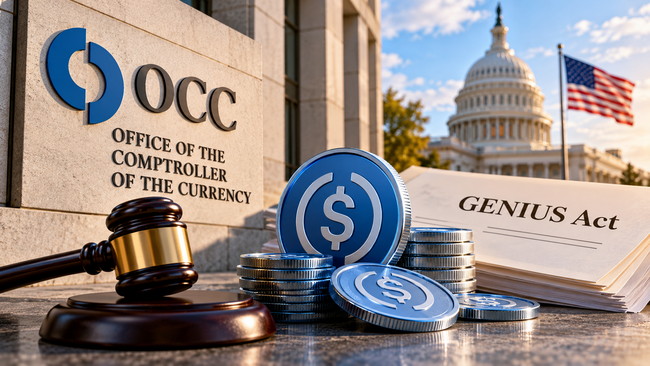
The US Office of the Comptroller of the Currency (OCC) has finalized new rules for companies that issue payment stablecoins under the GENIUS Act. The framework covers reserve backing, customer redemptions, risk management, and regulatory oversight. It will take effect on January 18, 2027.
Advertisement

In an October 21 announcement, the OCC said the rules apply to eligible US stablecoin issuers, certain foreign issuers, and custody services supervised by the agency. Comptroller Jonathan Gould said the framework sets “strong standards for reserve backing, redemption, and risk management.”
OCC Finalizes First GENIUS Act Rule: No Safe Harbor for Existing Stablecoin Rewards
The OCC has issued its first final rule implementing the GENIUS Act, covering stablecoin issuance, custody, and third-party partnerships, effective January 18, 2027. Existing yield and rewards… pic.twitter.com/PI1ptZyhiH
— Wu Blockchain (@WuBlockchain) October 21, 2026
What the New GENIUS Act Rules Cover
The GENIUS Act, signed into law on July 18 last year, created a federal framework for payment stablecoins. Under the law, companies generally need approval as permitted issuers before they can issue payment stablecoins in the United States.
The OCC’s final rule explains how those requirements will apply to businesses it supervises. It covers reserve assets held to support tokens, the process for redeeming stablecoins, and controls for managing financial and operational risks.
The regulations also address audits, reporting, supervision, custody, and applications for issuer approval. They extend to national bank subsidiaries, certain nonbank stablecoin companies, and foreign issuers within the OCC’s jurisdiction. The agency said it reviewed hundreds of public comments from crypto companies, community banks, trade associations, and academics before finalizing the framework.
OCC Outlines Approval Process and Temporary Waivers
In separate guidance released October 21, the OCC said it will announce when companies can start submitting stablecoin applications. It must first receive approval from the Office of Management and Budget for the application forms. Applicants will need to provide information about their business plans, management teams, reserves, redemption arrangements, and risk controls.
The OCC said it will determine whether an application is substantially complete within 30 days and act on complete applications within 120 days.
Existing issuers can also receive temporary relief during the review period of their applications by the OCC. The companies that have a “substantially complete” application by January 18, 2027, may apply for a “waiver” of certain requirements. In general, the OCC believes that it should approve any requests for relief by an eligible existing issuer unless there are compelling reasons not to do so. These waivers do not automatically occur and may only last for one year.
Anti-Money Laundering Rules Will Follow Separately
The new rule does not settle every part of the GENIUS Act. Separate rulemaking, coordinated with the Treasury Department, will cover requirements linked to the Bank Secrecy Act, anti-money laundering controls, and US sanctions.
The OCC also issued new proposals for weekly and quarterly reports provided by regulated stablecoin issuers. This reporting would start in January 2027 and March 2027, subject to further approval. The agency also intends to keep working with other regulators and will continue to keep an eye on the progress of the stablecoin market towards the date of implementation set for January 2027.

eToro Platform
Best Crypto Exchange
- Over 90 top cryptos to trade
- Regulated by top-tier entities
- User-friendly trading app
- 30+ million users

eToro is a multi-asset investment platform. The value of your investments may go up or down. Your capital is at risk. Don’t invest unless you’re prepared to lose all the money you invest. This is a high-risk investment, and you should not expect to be protected if something goes wrong.
Advertisement