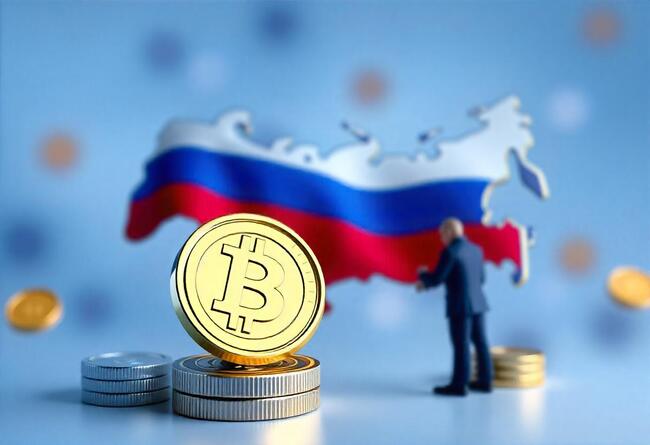
Highlights:
- Russia strictly prohibits cryptocurrency payments, insisting all domestic settlements use only the ruble.
- Digital currencies such as Bitcoin and Ethereum are allowed only for trading and investment.
-
Senior lawmakers, including Aksakov, continue to back the central bank’s strict rules on crypto.
Advertisement

Russia has again made public its refusal to allow cryptocurrency payments inside its national borders. Senior lawmakers restated that the ruble remains the only accepted unit for domestic settlements. They said digital assets, despite public interest, will stay outside daily payment activity across the country.
Parliament Fully Supports Central Bank on Crypto Limits
Anatoly Aksakov, a senior member of parliament, delivered the position during remarks to state news agency TASS. He stressed that digital coins will never qualify as money at the national level. According to him, cryptocurrencies can exist only as investment products. The statement came amid rising local interest in Bitcoin and Ethereum. Officials responded by repeating limits already set in law.
Aksakov emphasized the complete support from the parliament regarding the central bank. All the settlements within Russia would be dependent only on the ruble. Bitcoin and Ethereum had no chance at all in the monetary system. “We must understand that cryptocurrencies will never become money in Russia,” Aksakov said. “Cryptocurrencies can only be used as investment instruments. Where payment is required, it must only be conducted in rubles.”
Anatoly Aksakov, chairman of the Russian State Duma Committee on Financial Markets, said that payments within Russia must be made in rubles, and that cryptocurrencies such as Bitcoin and Ethereum will never become currency in Russia and can only be used as investment instruments.…
— Wu Blockchain (@WuBlockchain) December 17, 2025
Russian authorities again confirmed that cryptocurrencies will never gain legal tender status. Digital assets remain classified as speculative tools, allowed only for holding or trading, with no role in routine payments between individuals or companies.
Russia Maintains Cryptocurrency Payment Ban Amid Growing Regulation
The Bank of Russia has long been the strongest opponent of crypto payments. In particular, Governor Elvira Nabiullina has consistently supported wide bans covering transactions, exchanges, and even mining activities. These views led to a federal law in 2020 that officially banned cryptocurrency payments in Russia. Since then, regulators have treated any violations as clear financial breaches.
However, government officials disagreed. The central bank wanted a near-total ban like China, while the Ministry of Finance supported oversight, taxes, and limited use. Because of this, different bills stayed blocked in parliament for years. Despite the payment ban, Russian authorities have quietly allowed limited crypto use in certain areas. Last year, Aksakov revealed that Russian companies used cryptocurrencies to settle cross-border trades worth billions. Several leading banks also reported rising customer interest in crypto.
In September last year, President Vladimir Putin said Russia has become one of the world’s leaders in cryptocurrency mining thanks to its abundant energy resources, especially in Siberia. He praised the sector’s growth but warned that mining should not take energy away from housing and industrial needs. Putin has also expressed concern that uncontrolled mining could strain regional power supplies and emphasized the need for regulation, including energy and tax rules.

eToro Platform
Best Crypto Exchange
- Over 90 top cryptos to trade
- Regulated by top-tier entities
- User-friendly trading app
- 30+ million users

eToro is a multi-asset investment platform. The value of your investments may go up or down. Your capital is at risk. Don’t invest unless you’re prepared to lose all the money you invest. This is a high-risk investment, and you should not expect to be protected if something goes wrong.
Advertisement