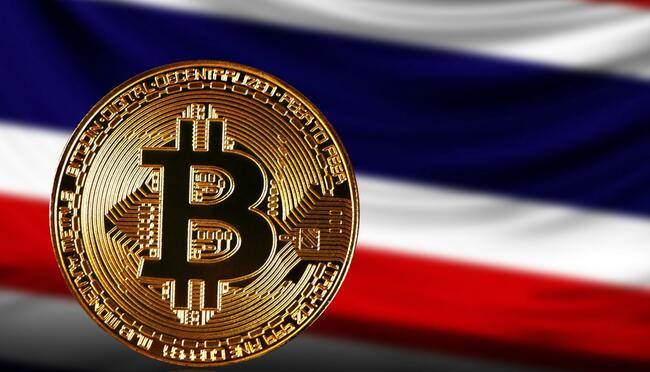
Highlights:
- Thailand has approved crypto as an underlying asset for regulated derivatives, following a proposal from the Finance Ministry.
- The SEC will amend the Derivatives Act and introduce risk controls for crypto-linked contracts and exchanges.
- Retail crypto payments remain banned despite capital markets expansion.
The Thai Cabinet on Tuesday approved a Finance Ministry proposal to expand assets allowed under the Derivatives Act. The change lets digital assets serve as underlying instruments for regulated derivative products. Officials said the SEC will now move to adjust technical rules.
Advertisement

🚨 BREAKING: Thailand’s SEC approves digital assets like Bitcoin to be used as underlying assets in regulated derivatives markets.
This means licensed exchanges can now structure crypto-linked derivative products under official regulatory oversight — a major step toward… pic.twitter.com/y8uKELXffK
— Meow Alert (@MeowAlertBNB) February 12, 2026
The updated scope includes cryptocurrencies such as Bitcoin and approved digital tokens. Authorities will also allow certain alternative assets, including carbon credits, under defined conditions. Licensed exchanges and clearing systems will oversee the new contracts. Market operators must comply with existing reporting and capital standards.
According to officials, the reform introduces crypto-linked products into the regulated capital markets framework of Thailand. Derivatives trading will be conducted within defined rules of supervision. Contracts have to comply with disclosure and risk containment standards. Exposure to institutional investors will be held in regulated venues and not in offshore platforms.
Thailand introduced digital asset oversight in 2018 under the Emergency Decree on Digital Asset Businesses. That act empowered the SEC to license exchanges and impose compliance. Later on, regulators increased the requirements of custody and investor protection. The derivatives expansion is based on the already existing structure.
Thailand Approves Expansion of Capital Markets Crypto Framework
The Cabinet decision will lead to a revision of the Derivatives Act by the Securities and Exchange Commission. Authorities will formulate regulations on contract format, margin terms, and working standards. They will also revise licensing conditions of companies that provide crypto-linked derivatives. Trading posts and clearinghouses have to satisfy supervision requirements prior to product listings.
The Thailand Futures Exchange will collaborate with the SEC on product specifications. According to officials, the design of contracts should emulate the volatility and liquidity of digital assets. They will look at settlement models and clearing arrangements prior to approval. Market participants must implement standard risk controls.
The regulator said recognizing crypto in derivatives will widen access to regulated investment tools. Secretary-General Pornanong Budsaratragoon stated, “This development will help promote more inclusive market growth, facilitate diversification and more effective risk management, and expand investment opportunities for a broader range of investors.”
At the same time, the SEC is drafting detailed rules for crypto exchange-traded funds. Officials expect clearer ETF guidelines early this year. Regulators have signaled approval in principle and may limit digital asset exposure to 5% within diversified portfolios.
🚨 JUST IN: Thailand SEC plans to roll out crypto ETF & futures regulations this year. Big step toward institutional crypto adoption in Asia 👀#Crypto #ETF #ThailandSEC pic.twitter.com/e7HSlUh5pF
— Coinbro.id (@coinbroid) January 22, 2026
Retail Payments Remain Barred Despite Trading Growth
Thailand still does not allow crypto to be used for everyday purchases. The central bank has kept its restrictions in place for consumer transactions and stablecoin use. Officials have made it clear that the derivatives reform does not change payment rules. Retail trading will remain active on licensed exchanges such as Bitkub. Traders can buy and sell digital assets under SEC supervision. However, they cannot use those assets directly to pay for goods or services.
In a related development, the government recently launched TouristDigiPay to assist foreigners. The program enables travelers to exchange their cryptocurrency for Thai baht to spend within the country. Individuals will have to pass through identity checks before accessing the service. Merchants are also required to be registered and subject to strict rules of operation.

eToro Platform
Best Crypto Exchange
- Over 90 top cryptos to trade
- Regulated by top-tier entities
- User-friendly trading app
- 30+ million users

eToro is a multi-asset investment platform. The value of your investments may go up or down. Your capital is at risk. Don’t invest unless you’re prepared to lose all the money you invest. This is a high-risk investment, and you should not expect to be protected if something goes wrong.
Advertisement