Highlights:
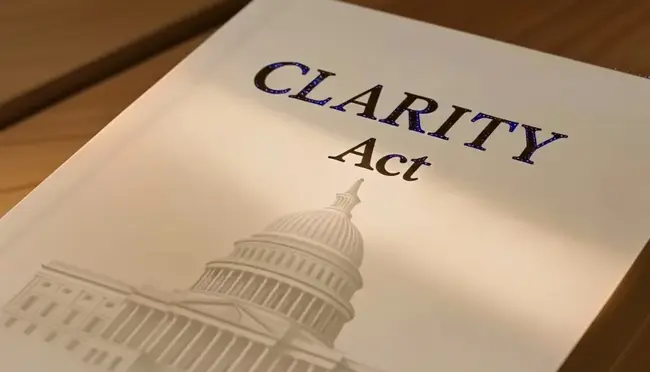
- JPMorgan says the CLARITY Act approval could improve crypto market confidence later this year.
- Senate disagreements over stablecoin rewards continue to delay a final vote.
- The proposed framework would clearly divide token oversight between the CFTC and the SEC.
JPMorgan said digital asset markets may strengthen later this year if Congress passes the pending market structure legislation. The bank linked its outlook directly to developments on Capitol Hill. Analysts stated that clearer rules would reduce legal uncertainty that has weighed on trading activity.
Advertisement

🚨NEW: JPMORGAN FLAGS CLARITY ACT AS MAJOR CRYPTO CATALYST
A new JPMorgan report says the U.S. CLARITY Act could pass by mid-year.
The bank calls it a potential second-half catalyst for digital assets.
The legislation aims to end “regulation by enforcement.”
It could provide… pic.twitter.com/qjErNxx2Sz
— BSCN (@BSCNews) March 2, 2026
In a recent research note, JPMorgan addressed the current environment. Nikolaos Panigirtzoglou wrote, “While sentiment remains negative in crypto markets, we continue to believe that a potential approval of the market structure legislation most likely by mid-year could serve as a positive catalyst for crypto markets into the second half of the year.”
The House of Representatives has already approved the proposed CLARITY Act framework. Meanwhile, the Senate has not scheduled a final vote. Senators are divided over how the bill should define oversight and compliance standards for digital assets. These disagreements have slowed the legislative progress. Trading desks and asset managers are monitoring these discussions. Several firms have delayed expansion plans until lawmakers clarify the regulatory boundaries.
Senate Gridlock Centers on Stablecoin Yield and Conflict Rules
Senators are debating how the CLARITY Act framework should treat stablecoin rewards. Crypto companies want permission to offer incentives to users who hold dollar-linked tokens. On the other hand, banking groups are opposed to that structure. They argue that yield style features could move deposits away from traditional bank accounts.
Lawmakers are also reviewing how the bill interacts with the GENIUS Act. President Donald Trump signed that law in July to establish federal oversight for stablecoin issuance. Some senators believe that the earlier measure does not fully address market structure questions tied to exchanges and token classification.
Coinbase initially supported the draft legislation. Chief executive Brian Armstrong later withdrew support after lawmakers included language tied to stablecoin rewards. Armstrong recently claimed that a viable compromise has been found in the discussions, but there is no final consensus.
Market structure is making great progress, and I believe we're going to reach a win-win-win outcome.
A win for the crypto industry.
A win for the banks.
And, most importantly, a win for the American consumer. pic.twitter.com/t0WM3XUZX4— Brian Armstrong (@brian_armstrong) February 18, 2026
Another dispute concerns conflict-of-interest restrictions. Some lawmakers are seeking to ban senior government officials and their immediate families from certain activities related to crypto. Supporters of that provision argue that such limits will protect public confidence in regulatory decisions.
These specific disagreements have prevented the Senate from advancing the CLARITY Act to a final vote. Lawmakers are still exchanging revised language tied to stablecoin oversight and eligibility standards.
CLARITY Act Framework Outlines Eight Structural Changes for Digital Assets
The CLARITY Act would establish a formal system to classify digital tokens. The proposal divides oversight between the CFTC and the SEC. Regulators would categorize tokens as digital commodities or digital securities based on the defined criteria.
The bill includes a clause for certain exchange-traded funds. Lawmakers have also proposed a transition period that allows new projects to raise up to $75 million annually while working toward decentralization milestones. The framework creates a process for tokens to move from securities classification to commodity status once networks meet the decentralization requirements. That shift would allow broader secondary trading under established brokerage systems.
The proposal also sets registration and custody standards for crypto intermediaries. Institutions such as BNY Mellon and State Street could provide digital asset custody services under clearly defined rules if the bill becomes law. The text confirms that tokenized securities remain subject to existing securities regulations.
Lawmakers included exemptions for miners, validators, and software developers during non-custodial development phases. The CLARITY Act introduces small transaction tax exemptions for routine crypto payments. It also clarifies how staking rewards should be treated for tax purposes.

eToro Platform
Best Crypto Exchange
- Over 90 top cryptos to trade
- Regulated by top-tier entities
- User-friendly trading app
- 30+ million users

eToro is a multi-asset investment platform. The value of your investments may go up or down. Your capital is at risk. Don’t invest unless you’re prepared to lose all the money you invest. This is a high-risk investment, and you should not expect to be protected if something goes wrong.
Advertisement