Highlights:
- The ECB warns stablecoins are linked to falling bank deposits and slower corporate lending.
- Deposit shifts push banks toward more expensive market funding and tighter credit conditions.
- Dollar-backed tokens dominate the market and raise concerns over the euro area’s monetary control.
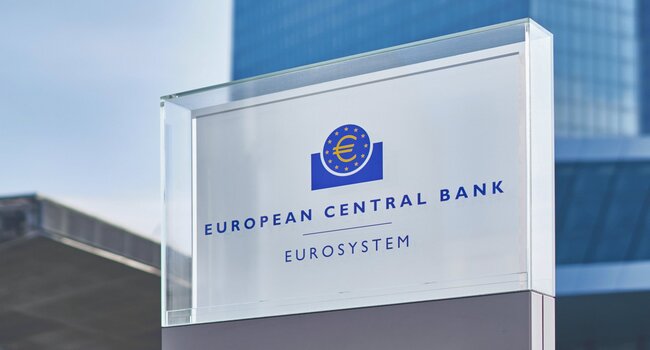
The European Central Bank has warned that rising stablecoin use is linked to falling retail bank deposits and weaker corporate lending. In a working paper titled Stablecoins and Monetary Policy Transmission, ECB staff examined deposit and credit data across the euro area. The analysis shows that higher interest in stablecoins corresponds with measurable declines in deposit balances.
Advertisement

✅ The European Central Bank is raising concerns: the growing popularity of stablecoins could lead to deposit outflows from traditional banks and weaken credit creation.
In its latest report, the ECB notes that the more people move funds into digital “dollars” and “euros,” the… pic.twitter.com/aKyIvM5gYB
— Andy M invest ⚑ ☄️ (@GnatykA) March 3, 2026
Households and companies are moving part of their funds into digital tokens pegged to major currencies. As money shifts out of bank accounts, funding conditions tighten. Deposits remain the main source of financing for traditional lending activity.
The statement read:
“Banks rely heavily on deposits as a stable and low-cost source of funding to support lending to households and businesses. When deposits decline, banks may be forced to rely more on wholesale or market-based funding, which is typically more expensive and less stable.”
The study finds that as deposits decrease, lending to firms also slows. Banks substitute some of the lost funds with market funds. Those sources are more expensive and vary more intensively in times of stress. The increased costs of funding decrease margins and limit new lending.
Stablecoins have expanded rapidly in recent years. The market capitalization has more than doubled over the past three years. The sector now stands above $312 billion. Dollar-backed tokens account for about $301 billion of that total.
ECB Warns Stablecoins May Disrupt Rate Transmission Across the Economy
The paper also analyzes the impacts of deposit shifts on monetary policy transmission. Central banks manipulate the policy rates to control borrowing and economic activity. Banks typically transfer such changes via deposit and funding channels. Deposit outflows may weaken that mechanism.
Banks can no longer move their funding costs in tandem with policy rates should they rely more on wholesale funding. According to the ECB staff, the use of stablecoins disrupts various transmission channels. The impacts are based on scale, structure, and regulation. Minor adoption creates minimal disruption. Greater changes raise pressures on funding and interference with policy.
Concerns about financial stress have surfaced within the Governing Council. Olaf Sleijpen, who sits on the council and leads De Nederlandsche Bank, said rapid growth in dollar-linked tokens may require policymakers to review stress frameworks. He told the Financial Times that the expansion has exceeded earlier expectations.
According to the Financial Times, Dutch central bank governor and ECB member Olaf Sleijpen warned that a stablecoin run could force the ECB to adjust its interest rate path, with effects extending to Europe’s economy and inflation. He noted that U.S. dollar stablecoins have…
— Wu Blockchain (@WuBlockchain) November 17, 2025
At the European Systemic Risk Board conference, Christine Lagarde addressed reserve requirements. She said issuers outside the European Union should meet the same strict reserve rules as those operating inside it. Lagarde argued that consistent standards help reduce the risk of sudden withdrawals. She also said the MiCA framework leaves gaps in its treatment of stablecoin issuers.
Dollar-Pegged Tokens and Growing Currency Influence Risks in Europe
Dollar-backed tokens dominate the stablecoin market. Assets linked to the US dollar represent roughly 97% of the total capitalization. If euro area users rely more on dollar-denominated tokens, cross-border activity may shift toward digital dollars. Domestic monetary policy may carry less influence over those flows.
Christine Lagarde said the ECB has completed the technical groundwork for a digital euro. She stated at the bank’s final press conference of the year that the systems are ready. The central bank now awaits approval from EU lawmakers before moving forward.
The digital euro is technically ready, with a targeted launch around mid-2029 pending approval from the European Parliament and Commission. ECB President Christine Lagarde highlights MiCA regulation as key to safely integrating stablecoins alongside the digital euro. The project… pic.twitter.com/PNdB548fhf
— Fama Crypto (@Famacrypt) December 19, 2025

eToro Platform
Best Crypto Exchange
- Over 90 top cryptos to trade
- Regulated by top-tier entities
- User-friendly trading app
- 30+ million users

eToro is a multi-asset investment platform. The value of your investments may go up or down. Your capital is at risk. Don’t invest unless you’re prepared to lose all the money you invest. This is a high-risk investment, and you should not expect to be protected if something goes wrong.
Advertisement