
Highlights:
- Bankers Association urges OCC to slow crypto charter approvals until the GENIUS Act rules are clear.
- They said uninsured crypto banks could risk customer assets, cybersecurity, and regulatory compliance gaps.
- ABA wants stricter naming and transparency rules to protect consumers from confusion.
The American Bankers Association (ABA) has raised strong concerns over the pace at which the Office of the Comptroller of the Currency (OCC) is granting national trust bank charters to crypto and stablecoin firms. In a detailed comment letter submitted on Wednesday, the trade group urged the OCC to slow down approvals until the regulatory framework under the Guiding and Establishing National Innovation for US Stablecoins (GENIUS) Act is fully clarified.
Advertisement

🚨BANKS WARN ON CRYPTO GETTING FED ACCESS
The banking lobby says conditional charters tied to unfinished bills like the GENIUS Act could grant crypto firms Fed access before rules are fully defined.
"Once these firms get Fed access and national licensing, we will be talking… pic.twitter.com/vfnplLAPiq
— Coin Bureau (@coinbureau) February 12, 2026
American Bankers Association Warns on Risks of Approving Crypto Charters Before Clear Rules
The ABA emphasized that applicants involved in stablecoin and digital asset activities are facing unsettled oversight from both federal and state regulators. According to the association, moving forward with charter approvals before the GENIUS Act rules are finalized could expose gaps in compliance and oversight.
The letter specifically noted that the OCC should not advance applications where an institution’s regulatory obligations remain undefined. The ABA stressed that clarity on the GENIUS Act rulemakings must come into view before any new charters are approved.
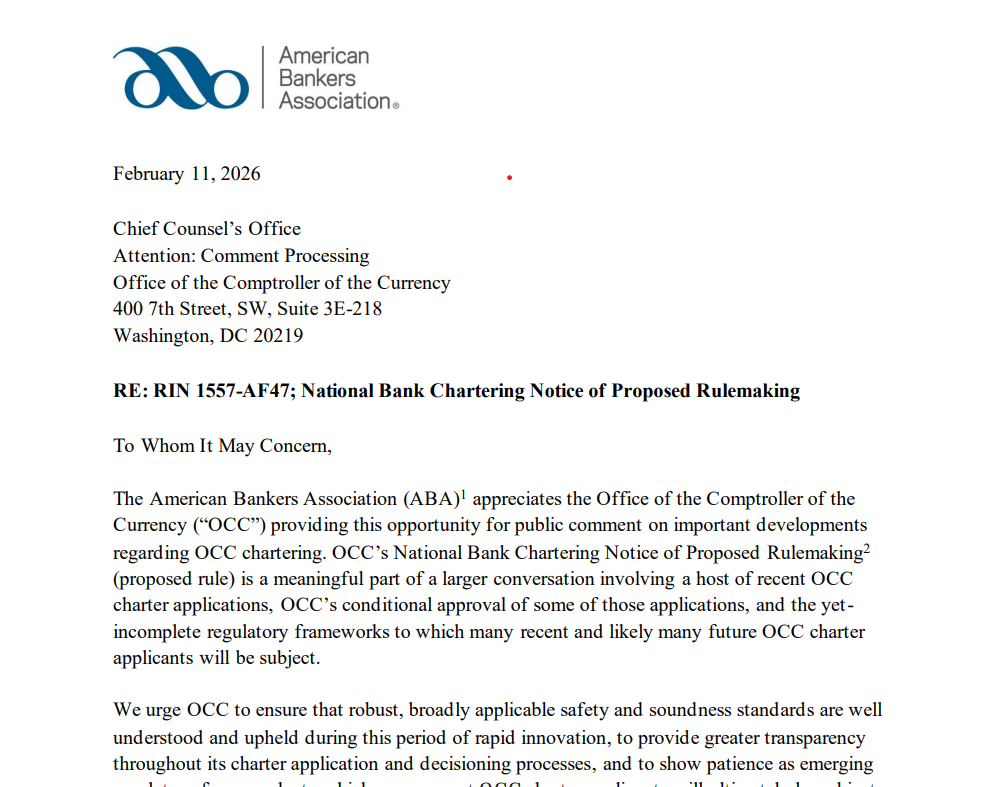
The banking lobby said uninsured national trusts for digital assets carry serious risks. They highlighted issues like poor customer asset protection, conflicts of interest, and cybersecurity gaps that need urgent attention. They also warned that these charters could let firms avoid SEC or CFTC oversight. Companies dealing in securities or derivatives might use them as loopholes to escape stricter rules. The ABA asked the OCC to be patient with crypto charter applications, saying regulators should fully understand their duties before approving.
ABA Calls for Transparency and Stricter Naming Rules for Crypto Charters
The ABA asked for more clarity on how the OCC sets capital, operational, and resilience rules for crypto charters. It also said that limited-purpose trust banks should not use “bank” in their name if they do not offer full banking services. The group said stricter naming would help consumers understand which institutions are safe and which are uninsured. This would reduce confusion about their role and reliability. This comes after the OCC gave conditional approvals to five crypto firms: Bitgo Bank & Trust, Fidelity Digital Assets, Paxos Trust Company, Ripple National Trust Bank, and First National Digital Currency Bank.
On December 12, the OCC gave these firms special charters. They can manage customer digital assets but cannot take deposits or give loans. The ABA warned after this. Banks are worried that crypto firms are growing too fast without clear rules. They fear how these firms fit into the financial system. At the same time, the ABA is asking Congress to pass crypto rules. This includes the Digital Asset Market Clarity (CLARITY) Act.
In digital asset market structure legislation, it is important that the requirements in the GENIUS Act prohibiting the payment of interest and yield on stablecoins are not evaded.
The latest from BPI, @ABABankers, @ConsumerBankers, @FSForum and @ICBA: https://t.co/YOta4d4UDA
— Bank Policy Institute (@bankpolicy) August 12, 2025

eToro Platform
Best Crypto Exchange
- Over 90 top cryptos to trade
- Regulated by top-tier entities
- User-friendly trading app
- 30+ million users

eToro is a multi-asset investment platform. The value of your investments may go up or down. Your capital is at risk. Don’t invest unless you’re prepared to lose all the money you invest. This is a high-risk investment, and you should not expect to be protected if something goes wrong.
Advertisement