Highlights:
- Korea and France’s central banks met in Seoul to discuss digital assets and climate risks.
- Stablecoins and CBDCs are changing how payments and global finance systems work.
- South Korea and France are tightening rules to control stablecoins and protect financial stability.
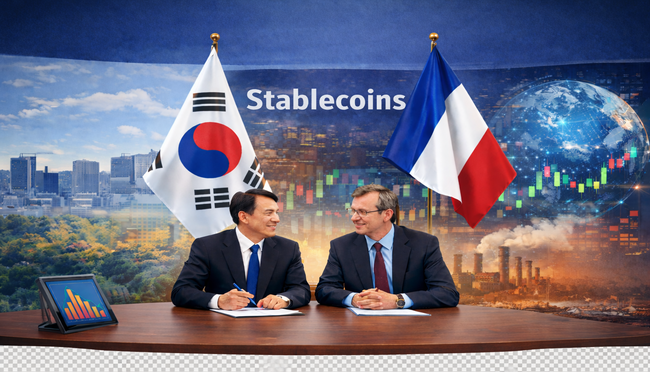
The Bank of Korea and the Banque de France opened a two-day seminar in Seoul on Tuesday to examine how digital assets and climate risks affect the global economy. The session runs through Wednesday under a joint academic exchange program to address changes in the financial environment.
Advertisement

The program, according to the media outlet Yonhap, rotates between the two countries each year to coordinate central bank research and policy decisions. Central bank researchers and academic experts from South Korea and France attended the seminar to present research and policy insights.
🇰🇷🇫🇷 BOK & Banque de France Talk Digital Assets in Seoul
The Bank of Korea and Banque de France held a joint seminar today on the future of money, payments, and tokenized finance.
Key Highlights:
▪️ Digital assets reshaping global payments
▪️ Tokenized finance challenges
▪️… pic.twitter.com/ooyHOE1Iu9— Crypto Patel (@CryptoPatel) April 7, 2026
The seminar examines how stablecoins and CBDCs affect payment systems, cross-border settlement, inflation trends, and financial stability. Policymakers also reviewed how central banks should adjust monetary policy and oversight as digital settlement systems evolve.
Moreover, the meeting took place during French President Emmanuel Macron’s state visit and summit with South Korean President Lee Jae Myung. Both leaders agreed to deepen cooperation in the economic and security sectors. Therefore, the seminar supports efforts to align digital asset regulations and central bank policy frameworks between both countries. Officials confirmed plans to expand the program into a larger forum to deepen research collaboration and policy coordination.
Role of Stablecoins and CBDCs in Payment Systems and Policy
Participants examined how stablecoins and CBDCs improve transaction speed, reduce costs, and support cross-border settlement systems. In addition, they discussed how these instruments could reshape the international monetary system and currency dynamics.
Moreover, policymakers examined how tokenization may reshape financial intermediation. They discussed how central and commercial banks may adjust liquidity management, lending, and transaction services. Therefore, regulators must update frameworks to manage risks and ensure financial stability. The talks also addressed how digital systems could change banking operations and financial service delivery.
France presented progress on its wholesale CBDC pilot programs during the seminar. These pilots test cross-border payments and settlement for tokenized securities. These efforts support the European Central Bank’s digital euro project and wider EU digital currency development. As a result, France continues to lead CBDC development within Europe.
At the same time, the Bank of Korea shared updates on Project Han River, its CBDC testing program. The project recently entered a second phase that includes real transaction testing. These updates show that South Korea has moved from research into real-world CBDC implementation.
Regulation Trends and Climate Risks Add to Stablecoins and CBDCs Policy Debate
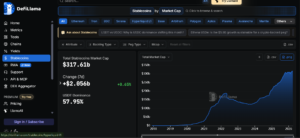
Stablecoin growth continues to shape global financial policy as regulators respond to rising adoption and transaction volumes. The market has reached about $317 billion in total value, rising from around $50 billion five years ago. In addition, stablecoin transaction volume surpassed $34 trillion last year, reflecting strong use in payments and settlement.
South Korea plans to require only licensed banks to issue won-based stablecoins to protect monetary policy and control capital flows. Lawmakers expect to finalize the legal framework by mid-year. In a related development, South Korea is planning to abolish the 22% crypto tax through an amendment of the Income Tax Act.
🇰🇷JUST IN: SOUTH KOREA OPPOSITION MOVES TO SCRAP 2027 CRYPTO TAX ENTIRELY
South Korea's opposition party has introduced a bill to fully abolish the planned 22% crypto capital gains tax scheduled for 2027.
The party argues that it creates an unfair disparity, given that stock… pic.twitter.com/BunESTNyVS
— BSCN (@BSCNews) March 19, 2026
Meanwhile, France regulates stablecoins under ACPR supervision and requires issuers to comply with EU MiCA rules. All issuers must complete licensing requirements by June 30. This framework would provide tight regulation and would be in line with larger European requirements of stablecoins and CBDCs.

eToro Platform
Best Crypto Exchange
- Over 90 top cryptos to trade
- Regulated by top-tier entities
- User-friendly trading app
- 30+ million users

eToro is a multi-asset investment platform. The value of your investments may go up or down. Your capital is at risk. Don’t invest unless you’re prepared to lose all the money you invest. This is a high-risk investment, and you should not expect to be protected if something goes wrong.
Advertisement