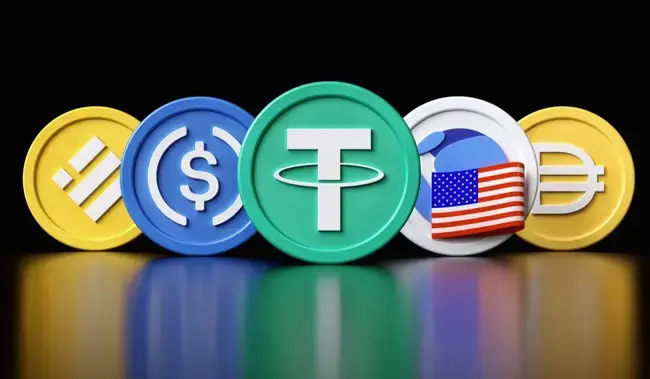
Highlights:
- Recent data shows that stablecoins are becoming a core layer of on-chain financial activity.
- Their use now spans trading, payments, remittances, and DeFi services.
- The market has reached around $300 billion, led mainly by USDT and USDC.
Stablecoins are increasingly emerging as the backbone of on-chain financial activity. Recent data from CryptoQuants shows that these digital assets are no longer used only for trading pairs. Instead, they are rapidly evolving into a critical infrastructure layer that supports payments, decentralized finance (DeFi), and global liquidity across crypto markets.
Advertisement

Stablecoins See Higher Wallet Activity as Market Cap Nears $300 Billion
One of the indications of this trend is the high growth rate in active stablecoin addresses. The number of wallets using ERC20 stablecoins on the Ethereum network and other blockchain networks is increasing. According to the data, the daily active addresses have now crossed nearly 593,000. This growth rate is much higher than in the past. It indicates that people are using stablecoins more actively, not only when the market gets extremely volatile.
Stablecoins Are Becoming the Core Infrastructure of On-Chain Finance
“Overall, on-chain data suggests that stablecoins are evolving from simple trading pairs into a foundational layer of the global digital financial system.” – By @xwinfinance
Data ⤵️https://t.co/zKCzWixXjt pic.twitter.com/8G1tTwOD0a
— CryptoQuant.com (@cryptoquant_com) March 16, 2026
According to the CoinMarketCap data, the stablecoin market has surged to around $320 billion, and USDT and USDC are leading this market. USDT has a market value of about $184 billion, while USDC stands at around $79 billion as of 16 March. Together, they make up most of the stablecoin supply and serve as the main liquidity and settlement assets across crypto exchanges and blockchain networks.
Stablecoins Meet Different Needs in Different Regions
Stablecoin use is increasing in different ways across the world. In many developing countries with high inflation or weak local currencies, people now use stablecoins as a digital alternative to the U.S. dollar. Nigeria is one of the strongest examples of this trend. Many people there use dollar-backed stablecoins like USDT and USDC to protect their savings from local currency weakness and to send money through peer-to-peer transfers.
In countries such as India and the Philippines, stablecoins are also becoming useful for cross-border payments. Many overseas workers use them to send money back home faster and at a lower cost than traditional banking methods.
In the United States and other developed countries, stablecoins are used more in trading and moving large capital. Stablecoins have become very significant in decentralized finance, not just in trading. Lending, as well as trading, uses them to have more price stability. On-chain data indicates that 80% of the total lending activities involve stablecoins. This indicates their importance to DeFi protocols and their operations.
Another sign of stablecoins’ growing role is the attention they are getting from regulators. In the UK, the Bank of England may review its proposed limits on stablecoin holdings after criticism from the crypto sector. Japan is also moving into this area. After recent rule changes, yen-backed stablecoins like JPYC are starting to grow as new digital payment tools. Overall, stablecoins are no longer just used for trading. They are becoming an important part of the digital financial system.
JPYC Inc announced the official launch of its yen-denominated stablecoin, JPYC, along with the release of its dedicated issuance and redemption platform, JPYC EX. The stablecoin is pegged 1:1 to the Japanese yen and fully backed by bank deposits and government bonds. Initial…
— Wu Blockchain (@WuBlockchain) October 27, 2025

eToro Platform
Best Crypto Exchange
- Over 90 top cryptos to trade
- Regulated by top-tier entities
- User-friendly trading app
- 30+ million users

eToro is a multi-asset investment platform. The value of your investments may go up or down. Your capital is at risk. Don’t invest unless you’re prepared to lose all the money you invest. This is a high-risk investment, and you should not expect to be protected if something goes wrong.
Advertisement