Highlights:
- ING Deutschland now lets retail investors buy crypto ETNs through Direct Depot.
- Products track Bitcoin, Ethereum, and Solana, issued by 21Shares, Bitwise, and VanEck.
- The bank highlighted tax benefits but warned of volatility, insolvency, and regulatory risks.
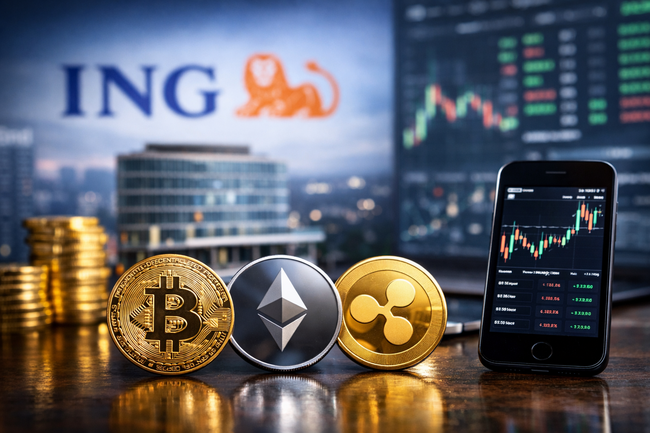
ING Deutschland, a large retail bank in Germany, has taken a clear step into digital finance. It has opened retail access to cryptocurrency-linked exchange-traded notes, also called ETNs. Now, customers can invest in products tied to Bitcoin, Ethereum, and Solana. They can do this through the bank’s Direct Depot platform. As a result, crypto exposure is now part of regular investment accounts.
Advertisement
The largest retail brokerage in Germany
Has rolled out access to @Bitwise_Europe crypto ETPS!https://t.co/XDzw7PzBDH pic.twitter.com/IiwrZgykMN
— Hunter Horsley (@HHorsley) February 2, 2026
ING Brings Crypto ETNs Into Traditional Banking System
These ETNs are physically backed products. They are issued by well-known providers such as 21Shares, Bitwise, and VanEck. In simple terms, they track the price of individual cryptocurrencies. At the same time, they trade on regulated exchanges, which adds a layer of trust. Because these products sit inside a normal banking system, ING is trying to make crypto investing easier. Investors do not need private keys or third-party wallets, which can reduce hesitation.
Martijn Rozemuller, Chief Executive Officer of VanEck Europe, explained the idea in a press release. He said this offers a low-barrier way to access crypto through exchange-traded products. He added that many investors prefer solutions that fit into existing depot structures. In addition, transparent costs matter to them. According to him, this partnership brings crypto exposure to the place where investors already invest, their securities depot.
One key attraction for German investors is the tax treatment. ING confirmed that ETN investments follow the same rules as direct crypto holdings. This includes possible capital gains exemptions for assets held longer than one year. This point may encourage long-term investing. ING also said the products are built to keep access simple. By adding crypto exposure to regular securities accounts, the bank aims to reach retail investors who prefer regulated platforms over unregulated exchanges. This move reflects a wider trend across Europe, where banks are slowly linking traditional finance with digital assets.
ING Deutschland Flags Risks While Taking Careful Steps Into Crypto
However, ING clearly warned about the risks. The bank pointed to extreme price swings and the chance of a total loss if issuers become insolvent. It also mentioned liquidity issues, market manipulation, and regulatory uncertainty. These risks show that crypto-linked products remain fragile, even when traded in regulated markets.
On its website, ING described cryptocurrencies as speculative products. The bank said they have no intrinsic value. It added that crypto prices depend heavily on psychological factors. These same effects also influence exchange-traded crypto assets. This shows that banks remain cautious, even while expanding crypto offerings.
ING Deutschland is part of a larger Dutch banking group with roots going back to the 18th century. In recent years, the bank has shown more interest in digital assets. The ETN launch is one step in this wider strategy. Reports also suggest that ING is working on a euro-based stablecoin with other banks. The plan is still at an early stage. Board approvals and regulatory clearance are not yet complete.
🚨BREAKING NEWS 破 : Dutch bank ING is reportedly developing a new stablecoin in collaboration with traditional finance and crypto firms. pic.twitter.com/oYfB8OQRwo
— Round Table Network (@0xRoundTable) April 22, 2025

eToro Platform
Best Crypto Exchange
- Over 90 top cryptos to trade
- Regulated by top-tier entities
- User-friendly trading app
- 30+ million users

eToro is a multi-asset investment platform. The value of your investments may go up or down. Your capital is at risk. Don’t invest unless you’re prepared to lose all the money you invest. This is a high-risk investment, and you should not expect to be protected if something goes wrong.
Advertisement