Highlights:
- Binance co-founder said he is discussing tokenizing national assets with governments.
- He said these talks aim to bring real-world assets on-chain efficiently.
- Zhao said the initiative could enable new models of government capital formation.
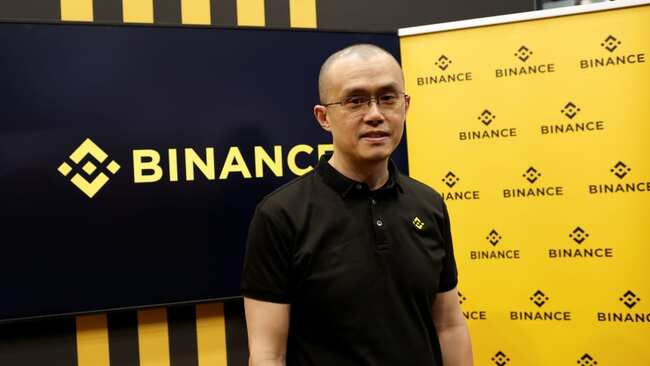
Binance co-founder Changpeng Zhao said he is talking with probably a dozen governments about putting national assets on-chain. He shared this on a panel at the World Economic Forum (WEF) in Davos, Switzerland, on Thursday. This shows more interest in using blockchain to fund projects and let the public participate, even though rules on digital assets differ by region.
Advertisement
.@cz_binance on what’s working in crypto – and what’s next – at @wef Davos 🔥
What's proven at scale: exchanges & stablecoins.
The next frontier:
> State-level tokenization of assets
> Crypto as the invisible payment rail
> AI agents transacting autonomously, using crypto as… pic.twitter.com/PG3eoNBMRV— YZi Labs (@yzilabs) January 22, 2026
Zhao Discusses Government Asset Tokenization
Zhao did not name the countries. He said these talks are part of a bigger plan to bring real-world assets on-chain. The goal is to create new ways for governments to fund projects as financing needs rise. “I’m talking with probably a dozen governments about tokenizing some of their assets, because this way the government can actually realize the financial gains first and use that to develop those industries,” said Zhao.
Tokenization converts physical or state-owned assets into blockchain-based tokens representing fractional ownership. In government contexts, this could include infrastructure, real estate, or natural resources. Zhao described the model as a way for public institutions to “realize their financial gains first” and channel the funds into essential sectors.
By allowing smaller allocations, tokenized assets widen access beyond large institutions. For instance, Zhao noted that governments could offer citizens exposure to strategic projects such as roads, ports, utilities, or land development. At the same time, for investors, these tokens function like digital shares that trade more easily than traditional private market holdings.
Tokenization also facilitates real-time transfer of ownership, tracking, and settlement, which is faster than the administrative process. This way, it smooths the process of raising capital and increases participation.
However, the process depends on legal systems that outline the rights of investors, custody, and the means of enforcement. The process is similar to previous privatization models, where countries sold shares of telecom or energy companies to raise money. Zhao explained that tokenization is different in that it breaks down ownership into smaller pieces to enable public or investor participation.
Binance’s CZ Highlights Past Government Engagements
Zhao’s comments in Davos align with his past statements about working with public-sector partners. He has mentioned engagement with Pakistan, Malaysia, and Kyrgyzstan. In Kyrgyzstan, early steps include a stablecoin pegged to its national currency and plans for a U.S. dollar-backed stablecoin supported by $300 million in gold reserves. These initiatives show emerging markets experimenting with blockchain for liquidity and cross-border access.
Greetings everyone!
Today I received important and truly landmark news — the Kyrgyz stablecoin KGST has been listed on the global cryptocurrency exchange Binance @binance. KGST @KGSToken is backed 1:1 by the national currency of the Kyrgyz Republic, the som.I congratulate the… pic.twitter.com/U8dNPsKA6y
— Sadyr Zhaparov (@sadyrzhaparovkg) December 24, 2025
Moving on, Zhao also discussed crypto payments and automation. He suggested that cryptocurrencies could become the native payment method for artificial intelligence agents, enabling them to execute transactions for goods and services on behalf of users. He presented this as a natural evolution, linking programmable money and blockchain settlements to AI decision-making.

eToro Platform
Best Crypto Exchange
- Over 90 top cryptos to trade
- Regulated by top-tier entities
- User-friendly trading app
- 30+ million users

eToro is a multi-asset investment platform. The value of your investments may go up or down. Your capital is at risk. Don’t invest unless you’re prepared to lose all the money you invest. This is a high-risk investment, and you should not expect to be protected if something goes wrong.
Advertisement