Highlights:
- Brian Armstrong vowed that Coinbase would resist reopening the GENIUS Act, calling it a red line.
- Max Avery warned banks fear losing deposits, pushing lawmakers against stablecoin rewards.
- Armstrong predicted banks will eventually support stablecoin yields once profit opportunities appear.
CEO of Coinbase, Brian Armstrong, took a firm stance in a Saturday post on X and said any attempt to reopen the GENIUS Act crosses a “red line.” He blamed large banks for pressuring lawmakers to slow the growth of stablecoins and fintech payment services. Armstrong said he was surprised that banking groups could influence Congress so openly and without public pushback. He added that Coinbase will resist every effort to revise the law. “We won’t let anyone reopen GENIUS,” he wrote.
Advertisement

Exactly – I’m actually impressed the banks can lobby for this with a straight face and not get kicked out of senator’s offices. It takes some serious mental gymnastics.
We won’t let anyone reopen GENIUS. Red line issue for us. And will keep advocating for our customers and the… https://t.co/6EfF2oBn5A
— Brian Armstrong (@brian_armstrong) December 26, 2025
Banking Concerns and Stablecoin Rewards
Armstrong comments followed remarks from Max Avery of Digital Ascension Group, who said banks fear losing control over deposits and payment flows. Avery warned that the proposed changes could go far beyond limits on direct interest payments. He said lawmakers could also block rewards offered by platforms and partners. This step would end indirect yield-sharing programs that stablecoin services currently use.
Avery explained that banks earn close to 4% on reserves held at the Federal Reserve. In contrast, most depositors earn almost nothing on savings accounts. He said stablecoin firms challenge this gap by sharing part of their earnings with users. “They’re calling it a ‘safety concern.’ They’re worried about ‘community bank deposits, “Avery wrote. However, he added that independent research shows no evidence of unusual deposit outflows from community banks.
Armstrong’s Response and Future Outlook
Armstrong said banks are being short-sighted and will likely change once profits become clear. He said banks are likely to support interest and yield on stablecoins in the future. He also noted that current resistance wastes time and raises ethical concerns.
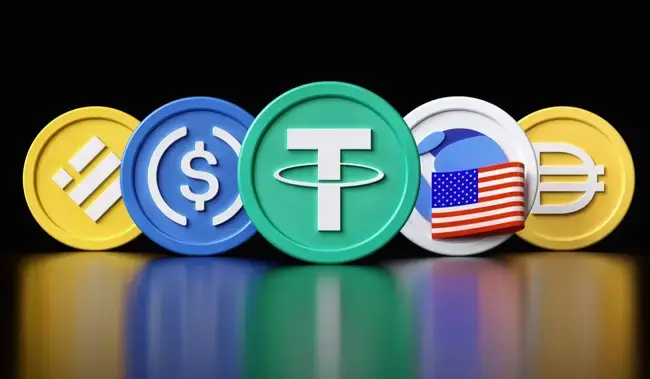
The GENIUS Act was developed after several months of negotiations and compromise. The act prohibits stablecoin issuers from paying interest on these virtual currencies directly to consumers. However, rewards can be given by platforms and other third-party partners.
Stablecoins Poised to Overtake ACH in Transaction Volume by 2026
Stablecoins are no longer just for crypto traders. They are growing fast and may compete with major U.S. payment systems. Galaxy Digital’s annual report predicts stablecoins could surpass the ACH network in transaction volume by 2026. ACH handles everyday payments like payroll, bills, and bank transfers. Galaxy says stablecoins are now big enough to compete with these traditional systems.
Thad Pinakiewicz, Vice President of Research at Galaxy Digital, said:
“Stablecoin velocity remains remarkably high compared to its traditional counterparts. We have seen a continued 30%-40% CAGR in stablecoin supply growth, with transaction volume increasing in tandem.”
Moreover, Solana co-founder Anatoly Yakovenko shared his 2026 outlook in a post on X. He said stablecoins will play a key role in digital markets. He expects the global stablecoin supply to exceed $1 trillion. Yakovenko also mentioned growth in AI and robotics beyond the crypto sector.
My 2026 predictions:
* $1t+ stables
* qc and fusion will be as elusive as today
* ai will solve a millennium problem
* 100k humanoid robots shipped— toly 🇺🇸 (@toly) December 26, 2025

eToro Platform
Best Crypto Exchange
- Over 90 top cryptos to trade
- Regulated by top-tier entities
- User-friendly trading app
- 30+ million users

eToro is a multi-asset investment platform. The value of your investments may go up or down. Your capital is at risk. Don’t invest unless you’re prepared to lose all the money you invest. This is a high-risk investment, and you should not expect to be protected if something goes wrong.
Advertisement